[00:00:00] Speaker A: Foreign.
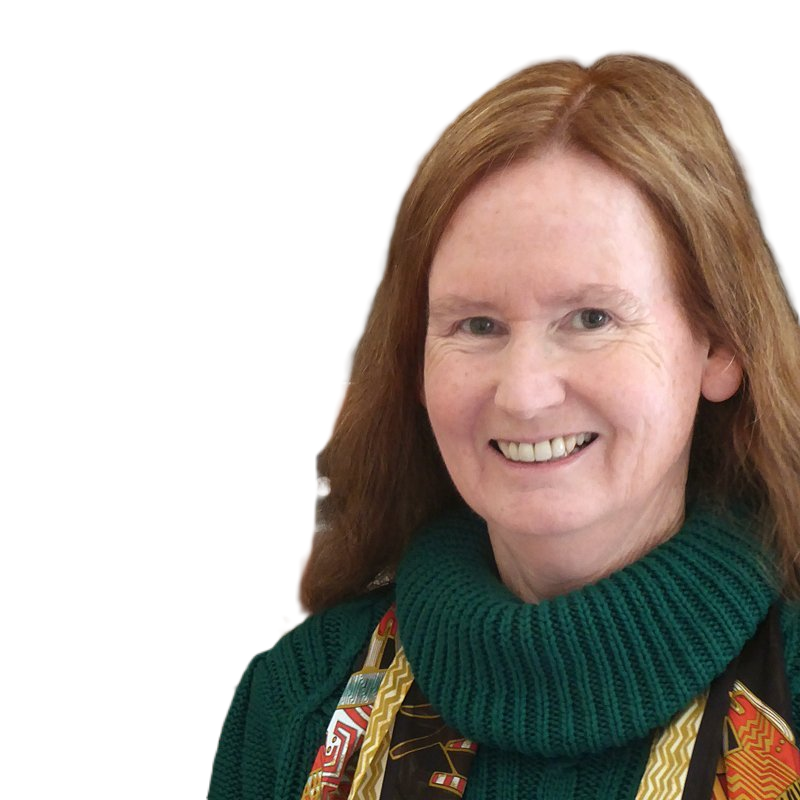
Hello and welcome to Small Publishing in a Big Universe. I am your host, Lisa Jacob. This month we have Ben Schekman discussing his books and how he handles self publishing from our sponsors this month from Water Dragon Publishing, Hunting the Dacia by Rebecca Inch Partridge from Cupid's Arrow Publishing, Dalliance's Second Chances anthology and Boondock's Bride by Patricia H. Heisler.
Later in life, there's always a second chance at love. Dalliance's Second Chances is an anthology which shows that even love can come back around.
From high school sweethearts to a disappearing airplane, these stories show that even though love comes around once, true love will always remain.
Second Chances is available in hardcover, paperback and ebook editions from Cupid's Arrow Publishing or support your local bookstore by ordering it through bookshop.org.
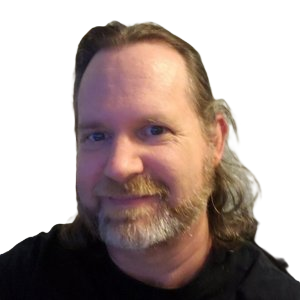
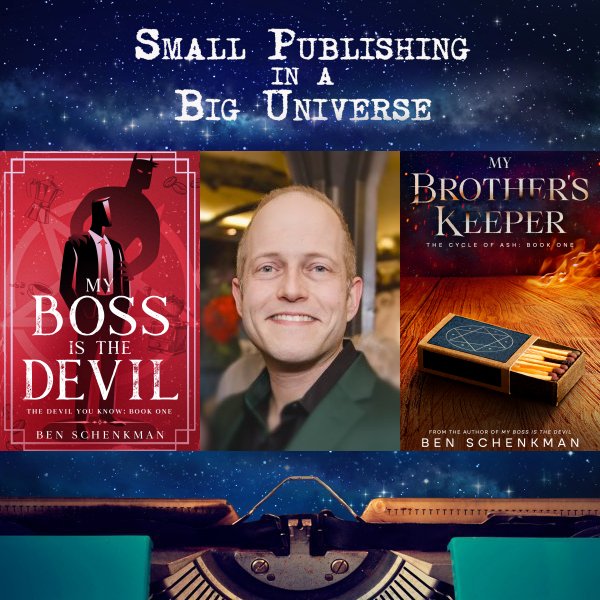
This is Lisa Jacob and I'm here with Ben Shankman. He's just come out with a book called My Brother's Keeper.
Welcome to the podcast.
[00:01:40] Speaker B: Thanks for having me Lisa. Really excited to be here.
[00:01:43] Speaker A: What is your most recent book about?
[00:01:45] Speaker B: My Brother's Keeper is about a Jewish mystic named Max Asher who has to come home to New Haven, Connecticut to bury his twin brother and then investigate the mysterious circumstances of his death. It's an urban fantasy with a noir mystery vibe to it, and it's a very Jewish urban fantasy. The magic system is based entirely around actual scripture. It touches on Kabbalah, but it's also angelic magic as it comes through scripture. It's mostly based on stuff out of the Talmud. So I am Jewish. I joke that I'm Jewish. I'm really more like humanistic, non practicing. But I was raised that way so I learned a lot about my own culture and religion researching for this book.
[00:02:33] Speaker A: Why did you decide to write this book?
[00:02:36] Speaker B: I have a number of other books out and maybe the better question might be why this one compared to the other ones. Because I've got a first series out called the Devil you know, which focuses more on Abrahamic God and the Devil kind of myths. I have another series out that I just started called the Chronicles of Corbin Pierce that focuses on indigenous magic with an environmentalist bent to it. And so this one is very different in that I said to myself, I really want a Jewish protagonist and a Jewish story because while there is Jewish fantasy and Jewish urban fantasy, it's more rare than I think it should be. So I said, you know what? Why can't I be the one to write a good Jewish urban fantasy series?
I had this idea and I Can't say anything about it because it's the twist at the end. But what I'll say is I thought about this book, about what the reveal is, and I spent the entirety of writing the book just waiting to write the reveal. So this is a book that I definitely started with the end in mind.
[00:03:42] Speaker A: Do you self publish or do you use a publisher?
[00:03:45] Speaker B: I am a small publisher at this point. My first book, My Boss is the Devil, I self published that and then while I was self publishing that, I was actually writing the second book in that series. And I had to make a decision because when you self publish, you get to pick whether you have an imprint name. And I said, you know what? The stigma around self published books is lower than it's ever been, but it still exists. The more strange and difficult the traditional publishing industry gets to break into, the more self publishing is going to exist and grow.
And I said to myself, what's one way that I can add what some people might think is a little bit of more legitimacy to my books? And this is actually something that's a piece of advice that a lot of new independent authors get is pick an imprint name, pick a publisher name.
And for many people, that's exactly what it is. They just pick a name and it represents their body of work. And so I started out that way. My main character in the first series, his name is Nick. And in current meme talk, he's not a golden retriever, but he's got a certain energy. And I was trying to describe him for a little piece of marketing and I said, nick doesn't have golden retriever energy. He's a barista and heavily addicted to caffeine. So he has caffeinated terrier energy. And that was it. So I named my publishing company Caffeinated Terrier Press and I started publishing my own books.
[00:05:18] Speaker A: What kind of writing advice do you think you could give to a newer aspiring author?
[00:05:23] Speaker B: Let's start with writing advice and then we'll talk about publishing advice. So, writing advice. I give this advice because it's advice that I've at least gotten paraphrased. And I think it's super important. And as a writer, this dovetails into publishing. You can't publish a book that doesn't exist. Do your best to not heavily edit as you go. Just put words on the page. It's advice from Stephen King and other greats. The only thing that matters is words on the page page. And if you're writing a book, you have to write it. And if you're Doing nothing but constantly going back and revising what you wrote, then you're never going to finish. They call it the dirty draft for a reason. And for the record, that varies greatly. The idea that your first draft has to be trash is, I think, a myth that we should throw away because that's not how it works. Some people's first drafts are relatively clean. Some people's first drafts need to be rewritten 10 times.
No person's experience is the same. But your first draft isn't supposed to be perfect. That's the key publishing advice, because this actually does go back and influence what you write. If you're going to publish, know why you want to publish. And this is the advice that I always give because so many questions that come up are at least partially answered by did you know why you wanted to publish in the first place? Someone will go on the Internet and they'll post on one of the self publishing reddits or subreddits and they'll say, why does no one want to read my book? Why can't I get views on my book? Why can't I get reviews on my book? Why can't I sell my book? A lot of that is answered with a question in a very Socratic way of do you know why you wanted to publish in the first place? Because based on that, it changes what and how you write and how you approach things.
Do you want to make a living as a published author? If so, your choices are first, am I going to go independently published or am I going to go try for traditionally published? And that's the first question you have to answer because some genres like urban fantasy, they're not popular right now unless your last name is butcher. Urban fantasy has not seen a renaissance in quite some time. And I don't know if it's going to even with a new butcher book coming out. So if I wanted to make a living as an author, I wouldn't be writing urban fantasy because that's not how average urban fantasy authors make money. I can't quit my day job because I've published three books. And so if you want to make a living, you have to decide what you're going to do. And that comes to questions like, do I write to market writing? To market means am I writing what's popular right now? Meaning am I writing romantasy or romance or lit rpg? And those are super popular right now. And a lot of those do well in indie published spaces. There are plenty of authors that are getting really well known for those things. There are other genres that are not. They're just not super popular and you're not likely to make a living on one, two, three or more books in those genres.
So know why you want to publish. If it's to have your story read, if it's to get an audience and a readership and people who are consuming your art, and you just want it out there and you want people to experience it, then self publishing is a great way to go. Because if you make money at it, great. If you don't, you won't be disappointed by the fact that you're not making money at it. It becomes a very important question, the why of publishing. The other thing you have to remember is, and more publishing advice, going to the indie versus traditional route. So I'm going to describe this in a way that some people may disagree with me, but if you disagree with me, then you haven't queried a book. Traditional publishing is an extensive hazing ritual that very few people get through. The chances of both finding an agent and being published by one of the big five traditional publishers is very slim. And people don't understand how slim it is. To the point where I see people every day saying I'm a new author querying my book and I'm going to get published by the big five.
And that's a great mission statement. Do affirmations send that into the universe, but then accept that that frankly probably isn't going to happen because it rarely happens, can it? Yes. But if you want your book to be published in the next three years, you should consider publishing it yourself because the route to traditional publishing is long and just as a very generous estimate. I just did this math on an indie author server where we were Talking about Trad vs Ind be let's assume that my manuscript is perfect, it's ready to go. I took however long I took to write it and edit it and proof it, and I got it edited professionally and I'm ready to start querying agents because you can directly submit to some small publishers. But I'll actually say, and I guess this is a third or fourth piece of publishing advice, many small publishers are not actually going to do anything for you that you couldn't do yourself for a similar amount of money to what you're giving up in a short term of royalties. And we can talk about that after. But let's assume my book is ready and I'm going to go into the query trenches. I want to go for the big five, or at least a medium sized publisher. I'm going to find an agent first because many medium to large publishers do not accept unagented submissions. I query agents and it takes me a year to find an agent. That is not an unreasonable amount of time and in fact is relatively fast. There are people who have been querying agents with multiple manuscripts for more than five years and have gotten nothing but rejection. So the agent picks me up and then now my book is on submission to publishers. Let's say it takes them a year to sell my book. Some people never get agented and some books never sell. So again, average, let's say a year I sell to either the big five or someone as close to the big five as I can get. Great. Then I get on their publishing schedule because we have to go through rounds of edits and revisions and other things and they have long publishing schedules. So it's likely that my book is not going to make it onto their publishing schedule for at least another year. And again, that's generous because big publishers, you're probably waiting one to three years to see your book hit shelves.
So on the generous end, from the moment my book is ready to the moment it hits the shelves is a minimum of three years. If you're young and you got time and you don't care about waiting, sure, go do it. I published my first book two years ago. I had just turned 43. I don't have three years to wait for someone to decide whether my book is good enough to be published. And so decide what your timetables are. Because why you're publishing matters when the road to traditional publishing is so painful and so long. You have to have a thick skin to be an artist and put your art out into the world. You have to have an even thicker skin to get constantly rejected by people who send you boilerplate responses because the book didn't match their vibe for the day. On another another note, back to the small press versus medium to large publisher. What you're getting from a small press is you're getting editing and you're getting a cover and you're getting maybe some marketing and maybe some help with distribution. But the reality is many small publishers are doing print on demand. They're not doing print runs of your books. So they're effectively doing what you could do yourself if you were willing to pay for an editor and a cover designer. And you're paying them for the privilege, usually 50% of your royalties in order to do that. So I would caution any author who's thinking about going with a small publisher to ensure that they can do something for you that you can't do yourself.
[00:13:29] Speaker A: Where can people contact you?
[00:13:31] Speaker B: My website is BenShankman.com you can also find my work on caffeinated terrier press.com my e books are all tied to Amazon because they're in Kindle Unlimited, so if you pay for that subscription, all of my e books are available for you. But otherwise my audiobooks currently are widely available wherever you like to consume your audiobooks and I'm working on the third book in my series right now for the audiobook.
[00:14:05] Speaker A: Witchery by Fred Weiss When Teyla was a child, at her request, her parents told her of the battles of magic they endured against Malak the Dark Witch during his siege of the city state of of Kessia. They were eventually victorious, but their descriptions of Malak's dark powers and intractable ruthlessness unintentionally sowed fear in their daughter's heart. Her infrequent nightmares focused on the terrible ferociousness and fearfulness of the dark witch. When she was 20, circumstances led her to face Malak in person, and she discovered that her worst nightmares did not come close to the horrible reality.
Witchery by Fred Weiss is available from Water Dragon Publishing in paperback, hardcover and ebook editions, or support your local bookstores by ordering it through bookshop.org.
Thanks again to our guest. We plan on publishing a new episode every month. If you want to know more about small publishing in a big universe, visit our
[email protected] and subscribe to our newsletter. Send us your feedback by using the Contact Us link Like Us on Facebook @SPBUpodcast.
To find out more about the books and other products featured during this episode, please visit the Small Publishing in a Big Universe
[email protected] this podcast was recorded and edited by Lisa Jacob. Executive Producer is Stephen Radecki. Theme and ad music is provided by Melody Loops. This month's episode was sponsored by Cupid's Arrow Publishing and Water Dragon Publishing. You can listen to our podcast on Apple Podcasts, Spotify, Amazon Music, and most of your favorite podcast services.
Thank you very much for listening and see you next month.