[00:00:00] Speaker A: Foreign.
[00:00:08] Speaker B: Hello and welcome to Small Publishing in a Big Universe. I am your host, Lisa Jacob. This month we have some interviews. Live from lostcon. Coming from Cupid's Arrow Publishing. This month are rebranding romance by B.A. richards and on the Road to Galway by Alastair Nelson.
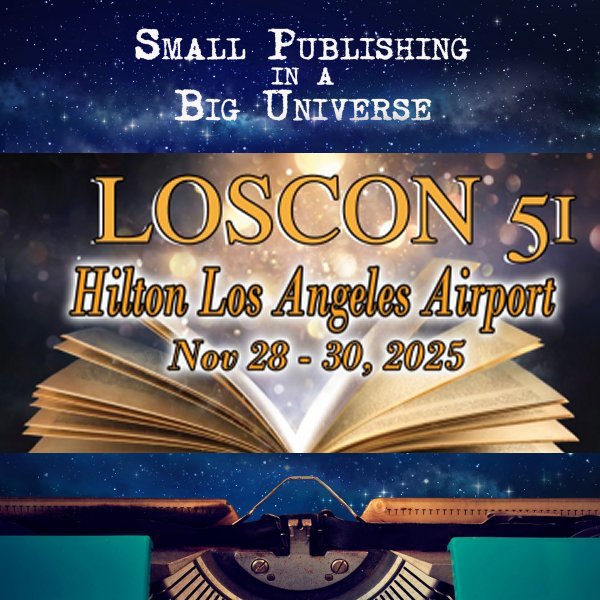
[00:00:28] Speaker C: This is live from losscon51, small publishing in a Big Universe. I'm your guest host, Brian C.E. buhl and I have with me.
[00:00:36] Speaker D: Hi, I'm Stephanie Tallent.
[00:00:38] Speaker C: Stephanie, I've heard it said before that in order to write well, it's important to have an interesting life. And as we've been talking before we started, it sounds like you've had an extremely interesting life, starting with West Point. So you want to talk a little bit about that experience.
[00:00:52] Speaker D: I always joke that when I was in high school, I wanted to go someplace far from home, but I didn't really have a lot of money and I didn't want to end up in debt. So I applied to West Point and got in.
And I always tell people it was a very interesting and valuable experience.
Not necessarily a great experience, but it was a valuable experience. And obviously you do something like that and then four years in the military after that, it does affect your worldview and a lot of habits and that sort of thing. I feel I am basically a problem solver and sometimes that rubs people the wrong way, but other people love it.
[00:01:33] Speaker C: So I don't want you to say anything that will get you in trouble. But you said you were involved in.
[00:01:37] Speaker D: It was a very, very long time ago. So I was in military intelligence, which it's really interesting, as we were talking about before. It's not always the nicest business, but it was very interesting. And I do feel like when I was growing up, I read all sorts of the kin Follett, Helen McInnes, all those spy novels and everything. And I'm totally dating how old I am at this point. But that's okay. I do find stuff like that slips into my work now.
[00:02:01] Speaker C: So then you got out of the army and then you went to Texas for vet school.
[00:02:06] Speaker D: I initially was thinking, oh, I'll go to business school. That's what a lot of my classmates were doing. And then I realized I didn't want to go to business school. But I've always loved working with animals. And honestly, you have to love working with people too, because all these pets come attached with their humans. And so I switched to undergrad zoology, got a zoology degree, got into vet school at Texas A and M.
And yeah, I was born in California I missed the beach and so I wanted to move back and I flew out, got a job and back in California.
[00:02:39] Speaker C: Since then, obviously from this background, you must be writing about intelligence officers that are seeing to make sure that animals are healthy.
[00:02:50] Speaker D: Well, I don't know if it's exactly like that. I mean, I write a lot of different things. I think my first love is fantasy. But I also do write some science fiction and I will say there have been some people who were in intelligence related fields. I do have a story that I'm shopping right now that has a unicorn at a vet school. But it is not a nice unicorn. It is a mean, mean unicorn that wants to kill everybody. And honestly, the inspiration for that unicorn was when I was at Texas A and M. You had to do both small animal and large animal rotations.
I chose equine and your large animal rotations.
At a certain point you had to stay overnight in this nasty bunk room and you had to get up in the middle of the night and do all the treatments. So there was this quarter horse mare and nobody warned me, nobody warned me that this mare was going to try to kill me. And she's like, I have whatever. I don't even remember what medication it was, but I have the medication ready. I go into the stall and then she's chasing me around this concrete stall, kicking at the walls. Somehow I managed to get stuff down her throat and got out of there without getting kill.
So stuff like that does find its way into my work occasionally.
[00:04:08] Speaker C: Where along your life's journey did you sit down to start writing? What point did the inspiration hit you? And was there any particular event that caught you that suggested you should start writing?
[00:04:19] Speaker D: I've always been a voracious reader. My mom was totally into mysteries. She had her bookcase full of Agatha Christie and Ellery Queens. I read all those.
My dad, he read a lot of Stephen King, so I started reading that. But even before then, I kind of made my way through the kids library, got all the little silver stars for reading everything. And I think it was when I was in fourth grade, there was the summer writing program and so I got to go and I still have. My mom had kept the little cardboard book that they, you know, made me a graft or whatever it bound and whatever.
And I had.
It was just so funny because I'm looking at what I wrote and I was like, wow, I still kind of do some of the same things.
So I would say I've been writing off and on ever since I was a child. And it was just kind of up and down over the years. I wrote some when I was at West Point, some really hideous stories that were influenced by J. McHenry and really bad. And then I started writing again. Seriously. I think it was like 2018 and started doing workshops. A lot of classes, a lot of writing. Right around 2019, early 2020, before COVID I signed up to do this writing challenge where I would do a short story a week. And so that I will tell you if you can make yourself finish a short story a week. And I'm not talking flash fiction. These were, I think on average between probably some more than I think I counted it out once. It's over 3,000. I don't think I was averaging over 4,000, but it was a good amount of writing.
Some of those stories did sell, which was good. One of the last stories I wrote was going to be purchased by somebody. But because of COVID that magazine never flew. And that was the story that I won Writers of the Future with.
[00:06:13] Speaker C: Let's talk about process. What is your writing process like? And then maybe when closing, if you were to talk to somebody that's up and coming writer just trying to do what you've done, what's your favorite writing advice you might give them?
[00:06:26] Speaker D: Can I start with that?
[00:06:27] Speaker E: Sure.
[00:06:28] Speaker D: Just keep learning. Just keep writing, just keep submitting.
I can't even tell you how many rejections I've got. But it doesn't matter. I mean, it's like you believe in yourself and you just keep putting it out there and you'll find your readers. I think there is writing that can be empirically bad. Okay. But I think a lot of it too is you need to find and this is something that's not even within your control a lot. But you have to find the right editor of a magazine that it clicks with. And people's tastes are different.
I don't think I'll ever sell anything to Clark's world, but I don't think I'm the writer for him.
But there's other people who love my stuff and buy it over and over again, so that works too well.
[00:07:11] Speaker C: Thank you so much. This has been Stephanie Tallant. And this is Small Publishing in a Big Universe.
This is live from the LostCon51, small publishing in a big universe. I'm Brian C.E.
[00:07:23] Speaker F: buhl and I have with me Brandon Case.
[00:07:26] Speaker C: Let's talk a little bit about your writing. How would you describe your fiction? I know that you write a lot of short stories. Do you have any short stories in your collection that Are your particular favorites?
[00:07:35] Speaker F: Yeah, my fiction tends to run a little bit dark, sensuous, poetic most of the time. Brandon Sanderson called it cognitively demanding. So be warned there. As far as the recent ones that have come out, I had a piece with Flash Fiction online earlier this year that I really love called Eight Legs of the Mother Hunted, which came out on Mother's Day because the editor is wonderful and has a sense of humor. It's an anthropomorphized spider mom who's running away from hunters in a forest that are shooting at her babies.
[00:08:04] Speaker C: Where do you usually draw inspiration for your stories?
[00:08:06] Speaker F: It kind of depends on the story. A lot of times I'll get some sort of feeling or image that I want to write to, and then that kind of meshes with if there's, like, a prompt or whatnot. I write for the Apex Magazine flash fiction contest every month, and they have a theme. Usually they're pretty broad. Like, there was a spider theme at some point, I think at the end of last year, which that story was born from. So that kind of gets reimagined into whatever I'm feeling at the time. I went through a period of writing stories about motherhood, which might sound odd, but, yeah, it's really kind of wherever my mind is, my emotions mixed with external factors into some sort of wonderful, gooey story thing.
[00:08:45] Speaker C: I know that you go out, you hike long hikes. When you're out on the hike, do stories come to you at that point?
[00:08:51] Speaker F: Yeah, I love being outside, and nature is an endless well of inspiration.
So when I'm hiking, I will be thinking, a lot of times I had some really good story moments. I hiked the Pacific Crest Trail a few years ago, and I would be alone for long stretches of time. And there's this really interesting switch. For me, at least, that comes when you're outside for a hike, not only for like a day or two days, but, like, five days in a row and don't see anybody. And my brain kind of melts down and goes to this, like, giggly, weird creative phase where I'm just having a blast telling myself stories as I'm wandering through the mountains. And it's quite unlike anything else. So, yeah, there are definitely zones in there that are just maximum creativity.
[00:09:33] Speaker C: Are there any stories that have come from that experience? You melted your brain down and then once you came back into civilization, wrote something.
[00:09:40] Speaker F: Probably my favorite one is Terry's about to Feed, which is a story that takes place on a giant who is the size of a planet. And he's curled up in the fetal position and he's being orbited by a star. And whenever he wakes up, he uncurls himself and then dunks his burrito in the star and then eats the burrito. But he has a whole population that's living on his surface and they're all very pun oriented and it's very weird. It's kind of like a mash up of Terry Pratchett and the Zanks books by Piers Anthony and all these weird, humorous, surreal parts of my brain. And the main character is awesome and he goes through weird adventures on this very anatomical body. It's like body horror comedy. I have yet to sell this piece because it is absolutely bizarre, but it's been held by a few places, so maybe one of these days it'll come out.
[00:10:30] Speaker C: What's next? Is there anything that you're working on now or anything you're looking forward to working on?
[00:10:35] Speaker F: Right now I'm actually shopping a novel, looking for a literary agent, which is great. It's a young adult contemporary fantasy and I love the piece and I edited it like six times so it's maximum polished and I'm hoping that'll become a thing soon. I'm also working on a memoir for my PCT hike that I mentioned earlier, which has been several years in the making, but because it was quite an emotional roller coaster. So that my next big project, hopefully I can get some long form out in the world.
[00:11:02] Speaker C: So let's talk a little bit about process. We've talked about where you get some inspiration and you write for the Apex prompts every month. When you sit down to start a story, is there any steps that you take? Do you plot more? Do you discovery, right. What's your process like?
[00:11:17] Speaker F: I'm kind of a hybrid. I like to have an idea of where I'm going, like a central image or feeling at the end, something that I want the piece to say or present the reader with an emotion. And then I kind of work backwards from there. And I really like the process of discovery. So I'll just have waypoints where I'll just have a handful of different turns that I know I want the story to take that are going to be impactful parts of the arc. And then from there I just go all the way back to the beginning where all the Nexus, where all those threads start and start discovering and my characters will wander around doing stuff that I had absolutely no intention for them to do, which is the best part for me. It gets to be that Real sense of surprise that you get as a reader. You just get that as a writer times 10. Because you're in the process of discovering all this. And it's the perfect story for your brain because it's coming out of your brain. Which is fantastic because then whenever I edit and I set something aside for a few months and come back to it and my brain has like the ram has cleared, the short term memory has cleared, and then I read it again for the first time and I just laugh hysterically because it's me telling myself jokes. Me from six months ago is telling current me jokes that are perfectly suited for my brain. And it's a riotous experience. It usually starts with some sort of image. I have some waypoints, I do some discovery and then I laugh my ass off because most of my work has a little bit of tongue in cheek in it.
[00:12:34] Speaker C: To close, I like to collect writing advice. So is there any favorite writing advice that you would pass on to somebody that's trying to either follow your footsteps or you might want to guide in a different direction? What's your favorite writing advice?
[00:12:46] Speaker F: All the classics are classics for reasons. Read and write. You just gotta sit down and do the thing. And as much as possible, just try to set aside any sort of fear that you have about the quality, especially for rough drafts. Just make the thing exist. It can be good later. You can do all sorts of refinement. You're really putting the facets on it in the revision process.
But just as much as possible, try to create a routine in which you are sitting down to write. If that requires some sort of caffeine or a little insulated time bubble, I do mine usually immediately after I wake up, before I have any sort of emotional clutter throughout the day. I'll just roll out of bed into my writing chair and then I'll write until my news dies and then go on with the rest of the day. So, yeah, read, write, and don't be afraid of what you're going to put out there. Go, no, hold, spar. And kind of figure the rest out later.
[00:13:33] Speaker C: Thank you so much. This has been live from Lostcon51.
This is live from Lostcon51. Small publishing in a big universe. I am your guest host, Brian C.E. buhl, and I have with me Scott Kilburn. Scott, this is a rare treat for me that I'm getting to interview you again. We talked last year. So let's just start with what's new with you in this last year.
[00:13:55] Speaker A: Well, what's new this year is I'm continuing on book three that I've started and I have some metal bookmarks and more stickers and stuff like that, so kind of expanding my wares.
[00:14:09] Speaker C: So it has been a year since we've talked about your books before. So why don't you go ahead and talk about your books, the series, what a reader would need to know in order to make the decision to buy your work.
[00:14:19] Speaker A: Okay. My books are dark contemporary fantasy or a dark urban fantasy with fairy. But not your typical fairy at the bottom of the garden, or shall we say Disneyfied. These are the Fae of old, old stories. The ones that are kind of brutal. They don't see it as being brutal, but that's why a lot of people in Scotland, Ireland and Britain in general would say they're the good people. Using air quotes on that because you only called them the good people because you didn't want their attention. She's not the protagonist, but she is. One of the main characters is the Forest Fae.
And her concept of retribution or dealing with human beings is, shall we say, a challenge for the rest of the character.
[00:15:13] Speaker C: Can you go ahead and state the name of the series and then the names of the books one and two that are out and any of the. If you have the name for the book three, what people have to look forward to there.
[00:15:21] Speaker A: Okay, so the first book is Summoning a Lost Fae. The second book is Consort to a Dark Fae. And I call the whole series the Fae Forest Chronicles.
I don't have a name for the third book. My sort of placeholder for the name would be diplomatic. It's probably going to be something like that because once we get to book three, all sorts of things are happening where the Fae world is wanting to return back to Earth and human beings are not too happy about that.
[00:16:01] Speaker C: Let's talk a little bit about process, what your primary process is for writing these stories. And then touch on what's changed since last year and like how your process has improved or grown.
[00:16:11] Speaker A: Process in terms of writing, yes. Usually I am a seat of the pants type writer because I like to be surprised as I'm writing. So I just keep writing until, yeah, sometimes I write myself into a corner and it's always fun to try to get myself out. And then once I'm finished with the first draft, then the real work begins. Of, oh well, this scene doesn't make sense in the overall arc of the story.
So I'll be cutting scenes, maybe adding others to smooth over rough spots.
My writing group is pivotal in keeping me honest.
So That I can, oh, this character makes sense or this other character doesn't make sense and I don't understand why everybody did this action instead of something else or those types of questions come up and I go, oh, okay, so I need to fix those.
So writing is mostly rewriting and editing.
[00:17:17] Speaker C: As you're working on this book three, is there anything that you've learned that
[00:17:20] Speaker A: I'm learning how to do a full on world building in this case because book one and two are. The setting is primarily our world, our contemporary setting with Los Angeles suburb and the surrounding environs. Book three, we go into the Fae realm and what that entails. What does it look like? Who's there? What are the factions?
It's not like they're this monolithic society and everybody's oh yes, we all want to do this. No, there's all sorts of different factions and groups and they all want to do their own special thing because the one kingdom will say, hey, this now we're on the map because we have this doorway to Earth and this kingdom was the wretched backwater of the world. And now suddenly is the bright spot on the map. All the other kingdoms are like, hey wait, we gotta, we gotta shut this down, down.
And then they realize, oh maybe.
And then individuals are like, how can I make a quick buck or gold piece or whatever they're going to exchange. There are reasons that everybody wants a little piece of or a big piece of the doorway between worlds.
And that was another thing throughout the series was the first book there's this portal gets opened and it kind of stays on the semi qt.
By book two everybody knows about it and they fight over it and they kind of come to an uneasy truce. And then book three is, yeah, that truce is extremely uneasy.
Emphasis on uneasy. Not easy. So.
[00:19:15] Speaker C: So is there anything you'd like to say to potential readers or people that are interested in your book? And it could be writing advice. But what would you say at this
[00:19:23] Speaker A: point as far as writing advice? The best advice I've gotten is keep writing and understand that there are people who are going to disagree and you have to take that in and be honest with yourself that they could be right and I need to change it. Your first draft is that it's a pile of bleh and needs to be revised. What I'm planning on or doing is trying to get the other books out and hopefully join me on my website, scottkilburnwriter.com and find out when the next convention I'm going to be at or when the third book comes out and other books that I have planned too.
[00:20:12] Speaker C: Thank you so much.
This is live from Lostcon51. Small publishing in a big universe. I'm your host, Brian C.E. buhl, and I have with me Kendall C. Stark.
[00:20:24] Speaker G: I write sci fi novels.
[00:20:26] Speaker C: Tell me about your sci fi novels. What a reader would like to know in order to help them decide to buy their novels.
[00:20:31] Speaker G: My debut, which is the only one I have out right now, is the first in a trilogy. It's is about a dark academy that kidnaps its students and brainwashes them into ruthless killing machines in an elite super soldier program. It's dark academia, it's sapphic, and it's a lot of found family vibes.
[00:20:50] Speaker C: Were there any particular inspirations that led to you writing this novel?
[00:20:54] Speaker G: I've always wanted to tackle a novel that reflected my time in the mental hospital, but I never really had a good idea until I watched a documentary on Netflix about schools in the USA would stage kidnapping. The parents would pay the school to stage a kidnapping and then bring their children to this horrible academy that ran on points and would try to break them psychologically and brainwash them into being more like civilized kids. And I really love that idea. And so I kind of made it into a dystopian. But a lot of what I wrote is a real thing that happened.
[00:21:29] Speaker C: So completing a novel, getting it published, getting it at a booth, all these things are. These are really huge milestones. Do you have any kind of support network that's been with you along the way or anything that you want to talk about that's helped you get to where you are?
[00:21:42] Speaker G: I think that the biggest thing that helped me publish my novel and the biggest part of what makes the novel so great is my best friend and editor, Apple. I call her Apple. Her name is Hollis Tied. And I showed her the novel when I was still in the beta phases and she really helped me. She took my psychotic ramblings and turned it into real art. And I wouldn't be anywhere without her.
[00:22:05] Speaker C: That's really excellent. How many books are in the series?
[00:22:07] Speaker G: Three planned, but only one is out.
[00:22:10] Speaker C: Is there an ETA for the next book?
[00:22:12] Speaker G: Late 2026, maybe. November. Ish.
[00:22:15] Speaker C: And where can your books be found?
[00:22:17] Speaker G: They're on Kindle Unlimited and they're also on paperback on Amazon and IngramSP Sparks,
[00:22:22] Speaker C: before we started this, you said that there's some interesting things to talk about with your process. Can you tell me a little bit about your process and how you go about writing these books?
[00:22:30] Speaker G: I'm A definite planner. I like to plan out everything that happens in my novel. It kind of makes me feel like a God. And I really like that feeling. But I have to have it all planned out in advanced. But as soon as I have it planned out, I can like pump out a draft in like three months tops. I use sprinting in order to write as quickly as possible. I can average about 1200 words an hour. And then once the first draft is done and I figure out all of the plot holes out myself, I will give it my editor and she'll kind of take that and okay, well, this doesn't make sense. Even though I checked it for plot holes, there's always going to be something that doesn't make sense and something I miss. And she really helps a lot with that. And she'll say, you should do this more. This character needs to be a bigger part. They're really strong. And then after we've gone through it, I'll send it to a line editor for grammatical stuff, format, publish, and then done. It's a real scientific method kind of thing.
[00:23:23] Speaker C: What about COVID art? What are you doing for cover art?
[00:23:25] Speaker G: I actually hired a comic book artist to design the COVID of my book because when I first had the idea, I wanted it to be a comic book. And I saw it, I outlined it with the images of a comic book. And so I wanted to look and feel like it was like a manga or a graphic novel, but it was words, because I do words. So I hired and she really brought my ideas to life and I was really happy about that. And now I still get questions like, oh, it's an actual novel with words. I'm like, yes, but it looks like a comic.
[00:23:55] Speaker C: So you've got some books planned for the series. Is there anything else in the Back Burner that you're thinking for next or are you just continuing with the series?
[00:24:04] Speaker G: The next novel I'm actually releasing is a time travel mystery. Totally different. It's called Kidnapping History and it's about a time traveling detective that works for the FBI and solves crimes where people try to change history.
And I like to say it's a cop book without it being copaganda. That's kind of like what the vibe is.
[00:24:25] Speaker C: I like to collect writing advice from various writers. And what is your favorite writing advice that you would pass on to somebody else that is coming along trying to do what you do?
[00:24:34] Speaker G: Show your novel to someone else. You will spend years toiling at your novel away, but the only way it'll get finished is if you give it to someone else and and be like, hey, what do you think? And that's how you progress from like writer to author. That's how you do it. Because people will have to read your work in order to be a writer. So it's best to just get that out of the way and just show someone your work.
[00:24:56] Speaker C: Well, thank you so much, Kendall. It's been really great talking to you. And this has again been live from Lostcon number 51.
This is live from Lostcon 51, a small publishing in the big universe. I'm your guest host, Brian C.E. buhl and I have with me Tony Young.
[00:25:13] Speaker E: I went under the pen name TL Young.
[00:25:15] Speaker C: Do you mind if I call you Tony?
[00:25:16] Speaker E: Yes.
[00:25:16] Speaker C: Is this your first Lost Con?
[00:25:19] Speaker E: No, actually I've been going to lost con since 2001 around there. And then I skipped the last 10 years.
[00:25:27] Speaker C: How does this one compare to your previous experience as well? I think it's a little smaller and
[00:25:32] Speaker E: I've been noticing that the children have all grown up and moved away and we've joked about that a while. There's a Star Trek panel. There's nobody under the age of 40. I'm being generous. And I said, well, do you know where you are?
So it was pretty funny. But yes, we are getting up there. But I think that I've met also a lot of young writers here too. A lot of young fans and aspiring writers. So it's pretty hopeful.
[00:25:59] Speaker C: Have there been any standout moments this weekend for you?
[00:26:02] Speaker E: The Escape Room.
[00:26:03] Speaker F: I believe it's my first one.
[00:26:04] Speaker E: And I've learned throughout the years that it's not about how much money you spend in the dealer's room. It's the experience. So I purposely sought out things that just would be a unique experience for me.
[00:26:14] Speaker C: You're a writer?
[00:26:15] Speaker E: I'm a freelance writer. I've written poetry novels. Written and self published. And he also wrote another self published novel called Grown from Hassan which is on Amazon. And primarily an independent film screenwriter.
[00:26:28] Speaker C: As we were coming up here, you said that there's a short film that you wanted to talk about.
[00:26:32] Speaker E: Oh yes. Actually I completed a feature film called Mickey Summer Resort and it was first sold to Troma, which is the first company that James Gunn worked with. And to have his career would be great. In all seriousness, Troma now streaming service isn't going to make you millions. But I'm also on Film Hub as of a few months and it's been doing pretty well. It's a niche market, but I've always wanted to do teen comedy and have my speak my truth about this particular community.
To be able to do it that way with that much anger and gusto, I feel it's a good.
[00:27:09] Speaker C: So tell me a little bit about the filmmaking process and what all the roles there that you had to take in order to get the film created.
[00:27:16] Speaker E: It helps to be working for an independent film company. However, my experience has been once you write a script, the director looks at it, throws it out, Caleb goes it my way. And that's been the general template. But you stick with the work alongside the director. And when you really gain his trust, then you can really collaborate. Which is how we did Samurai Cup 2, the sequel. It was much more grounded and much more a stronger Asian American presence in terms of its style and nothing necessarily the casting.
[00:27:46] Speaker C: It was a fairly good film.
What are the kind of major differences between writing process for whether you're working in your own stories or whether you're working on the script?
[00:27:57] Speaker E: As I'm experiencing that right now because of AI when you write a screenplay, you don't have to be so descriptive. You're not writing a brief tragedy, the rosy fingered dawn, the sunset and the ship sailing out and person looking out into sea and anguish on his face. All of that is up to the actor and the director. So you're basically just writing screen directions that are just simple and just allow the actor to trust the actors process. And dialogue doesn't have to be completely wordy. You're not on stage. You don't have to describe Thornton Wilder's town in the background because you're going to see it essentially. Just keep it simple.
[00:28:31] Speaker C: So setting is handled in the camera, whereas in a short story or novel, it's all up to you.
[00:28:37] Speaker E: Well, yes, although you should try to be as descriptive as possible to convey the mood you want to convey and describe a set that you want this particular scene to be set in. You don't have to overwrite it. And I think AI does that a lot. And I think there's a reason for it. Jahmir, think about it.
[00:28:54] Speaker C: So you mentioned about AI a couple of times. Where does AI show up in your processes?
[00:28:58] Speaker E: Well, only because a certain production company would hire you and they're suggesting you use this program. And I'm trying to avoid it, but I think at this point, I think we can just generate it and I'll just revise it from there. You just gotta trust that you know the story you want to tell and the computer doesn't.
[00:29:18] Speaker C: Let's talk a little bit more about process. A lot of our listeners are working on short stories and novels. What is your main process for working on those and how would our readers relate to those things?
[00:29:29] Speaker E: To start, I always repeat what Lewis Carroll said in Alice in Wonderland. Begin at the beginning, go through the middle, and when you get to the end, stop. Essentially, you have a voice. You have something you want to tell. You're not trying to make a speech, but you do want to create a vehicle for telling this story from your perspective, realizing that your voice, your perspective may not ever have been experienced or may not be seen in mainstream media. You want to be seen to know that this particular group is misunderstood and you want to tell the story from your perspective. Class of minorities and pass to quite a lot of people.
[00:30:07] Speaker C: I'd like to ask what is your favorite writing advice that you would give to somebody if they're trying to follow along in their shoes? They need to both work on stories as well as wrinkles.
[00:30:16] Speaker E: I'd say be true to yourself and don't be too arrogant not to listen to advice. You want to hear criticism and you also want to be able to discern criticism. Is that person criticizing me because of his own prejudices or is he being honest? Perhaps. Maybe he's more experienced than you are. Maybe he has a more valid perspective because he's lived through it.
[00:30:41] Speaker C: Thank you so much. This is live from Lostcon51.
[00:30:45] Speaker B: Thanks again to our guests and guest host Brian C.E. buell. We plan on publishing a new episode every month.
If you want to know more about small publishing in a big universe, visit our website at SPBU and subscribe to our newsletter. Send us your feedback by using the Contact Us link and like us on Facebook @SPBUpodcast.
To find out more about the books and other products featured during this episode, please visit the Small Publishing in a Big Universe
[email protected] this podcast was recorded and edited by Lisa Jacob. Executive Producer is Steven Radecki. Theme and ad music is provided by Melody Loops. This month's episode was sponsored by Water Dragon Publishing. You can listen to our podcasts on Apple Podcasts, Spotify, Amazon Music, and most of your favorite podcast services.
Thank you very much for listening and talk to you soon.